
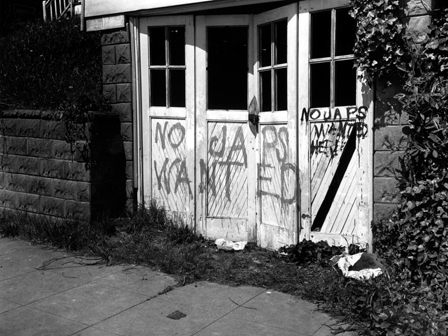
The West Coast was reopened for Nikkei to return home beginning in early 1945. The majority returned, despite racial hostility and threats of vigilantism. Many discovered that the belongings they had stored in church basements or with neighbors had disappeared, and that their homes and farms had been ransacked and either abandoned or taken over by squatters. Others were lucky enough to have trustworthy caretakers so that they could pick up the pieces of their lives. Housing shortages and lack of income led to former detainees bunking in hostels set up in Buddhist temples and Japanese language schools. Work was difficult to find, especially for the aging Issei, many of whom had to step down from being economically independent to take demeaning menial jobs. Many Nikkei say that as painful as being confined in camps had been, starting over after being released (with only $25 dollars and a one-way ticket provided by the government) was more difficult. The former detainees experienced mixed welcomes from new homes in the Midwest and East—some encountered discrimination while others reported, that away from the West Coast, people were more willing to accept Asian faces.

 Racial epithet(1940s)
Seattle, Washington
Courtesy of the Museum of History & Industry
Excerpt from Densho Archive
The Friends [Quakers] found this nice big brick house with a plate glass window in the front room. One night, this real estate agent from the area came by and threw a big rock through it, and then boasted in the beer parlor that he was going to come and force us out of this house. A Catholic priest heard about it and he let us know. And we told our friends about it, and they came that night and were sitting in the living room. They were all white people. When this gang that this man gathered from the beer parlor came walking down the street, we could hear them. But when he came to the door, it was opened by one of our friends. He invited him in and said, "Let's talk about this." Of course, that wasn't what he wanted. But he came in and looked around. He didn't say much, excepting that he didn't want us there and that he had a crowd of people outside who didn't want us there either. And then he left. He was grumbling but they all went away.
released from Minidoka, Idaho, incarceration camp, settled in Spokane, Washington, active church and civic volunteer