
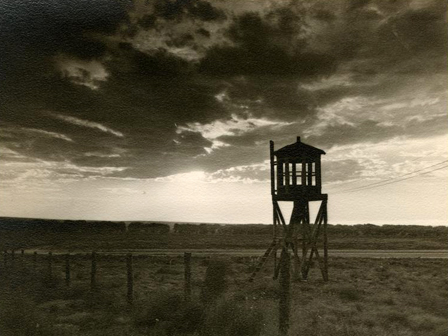
From 1942 to 1946, the U.S. government operated 10 incarceration camps it called “relocation centers” to detain over 120,000 civilians of Japanese ancestry, including over 70,000 US citizens (Nisei). Located in the harsh settings of deserts and swampland in western and central states, they operated like small artificial towns. Detainees worked to run the camps’ farms, kitchens, schools, hospitals, recreation halls, and newspaper offices. Families lived in single-room units in rough barracks, ate in crowded mess halls, and used common toilets and showers. The agency that ran the camps, the War Relocation Authority, tried to create a semblance of normal life, but even as residents attended movies, dances, and baseball games, they did not forget the barbed wire fences and armed guards that surrounded them. People’s basic needs were met in the U.S. camps, but lasting psychological and emotional damage was suffered by elders who lost a lifetime of work, young adults whose educations and careers were derailed, and even the small children whose early years were spent in confinement. Life-altering disagreements ruptured families and generations who faced an uncertain future in a country that treated them all as potentially dangerous and disloyal because of their race.
War Relocation Authority Incarceration Camps
Gila River, Arizona
Granada (Amache), Colorado
Heart Mountain, Wyoming
Jerome, Arkansas
Manzanar, California
Minidoka, Idaho
Poston, Arizona
Rohwer, Arkansas
Topaz, Utah
Tule Lake, California

 Guard tower(1944)
Granada (Amache) incarceration camp, Colorado
Courtesy of Densho, the George Ochikubo Collection
Excerpt from Densho Archive
In Manzanar, I remember it was all dusty and hot. I remember going to play at the creek. It was just inside the barbed wire fence, and I remember seeing the tower with the soldier up at the top with a gun. Another time they had baseball games. Then they had movies that they showed outside. You sat on the ground, and that was sort of exciting, because I'd never been to a movie outside. I was in charge of my brother Frank. We were sitting in this crowd on the ground and a dust storm came up, and everybody got up to leave. Everybody was swarming to go back to their barracks and I remember just being surrounded by bodies and holding onto Frank's hand and being scared. To this day, I do not like crowds, when they're jostling me. I attribute it to that time. Then I remember being afraid of scorpions. Now, Minidoka was the same except that in the wintertime it got really cold. I had to walk my sister Frances to school and back. And I had to watch Frank. We were walking home from somewhere, and when the rains came, the paths were really muddy. He got stuck in the mud and I couldn't get him out. I panicked. The climate was what I remember most, the extreme heat and extreme cold. But otherwise we played, as children do anywhere. It really isn't until after coming home, ten years after the experience, where I have all these stories about discrimination that were bothersome to me, because I was adolescent by then. That affects a person more than when they're grade schoolers.
at 7 years of age, removed from Bainbridge Island, Washington, to Manzanar, California, incarceration camp, transferred to Minidoka, Idaho, incarceration camp